
Small Goods Lifts: A Complete Guide for UK Businesses
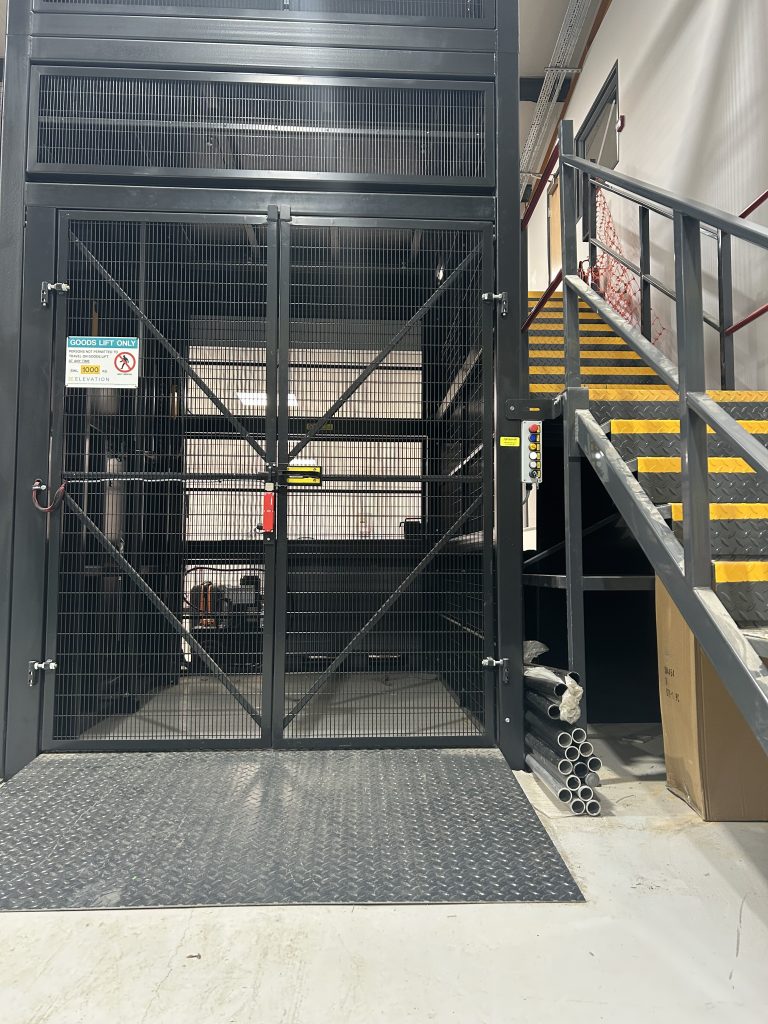
Where floor space is limited and manual handling begins to slow productivity, a small goods lift can transform how materials move around your facility. From mezzanine warehouses to retail spaces, compact goods lifts provide a safe, efficient, and compliant method of transporting goods between levels.
At Advanced Handling, we work with businesses across the UK to design and manufacture goods lifts that integrate seamlessly into real working environments.
-
What is a Small Goods Lift?
A small goods lift is a compact platform lift designed specifically to transport goods between floors – not people. They are commonly installed where manual handling is inefficient, unsafe, or impractical. Because these lifts are intended for goods only, they operate under different requirements to passenger lifts and usually feature simpler control systems and a lower footprint.
You may also hear small goods lifts referred to as goods lifts, cargo lifts, or service lifts. While the terminology differs slightly, the core purpose remains the same – to provide safe and reliable vertical movement of goods.
Businesses commonly choose small goods lifts for mezzanine floors, multi-level warehouses, retail spaces, restaurants, and workshops. The goal throughout is to reduce manual handling, improve workflow and create a safer working environment for employees.
-
How do small goods lifts work?
A small goods lift raises and lowers a platform between fixed landing points using a powered drive system. Goods are loaded onto the platform, the interlocked gates are secured, and the operator uses a control panel to send the lift to the required floor. Built-in safety interlocks prevent the lift from moving unless all gates are securely closed, and the platform stops automatically at each selected level.
Hydraulic systems are commonly chosen for their smooth lifting performance and ability to handle heavier loads. Modern goods lifts typically incorporate a range of built-in safety features including electro-mechanical interlocked gates; emergency stop buttons at each level and overload monitoring to prevent risks. Together, these components help ensure safe day-to-day operation and support compliance with UK regulations.
-
Typical Specifications and Features
While every installation is tailored to the operational environment, most small goods lifts in the UK fall within certain specification ranges. Load capacity is one of the first considerations. Compact lifts often start from around 250kg, with many businesses selecting 500kg models and heavier goods lifts reaching 1000kg or more where required.
Platform Size is usually designed around the goods being transported and the available space within the building. Some standard models have fixed platform sizes, while others can be manufactured to suit certain requirements. This flexibility allows the lift to integrate seamlessly into mezzanine floors, through-floor openings, or free-standing structures.
Travel Height often starts from around 2.5 metres, with most small goods lifts supporting two to four levels. Lift speeds are intentionally moderate, prioritising load stability and safety.
Door and gate configurations vary depending on the layout of the facility. Hinged gates, roller shutters and bi-fold designs are all common options that allow the goods lift to meet the operational workflow. Finishes such as galvanised steel, powder coating or stainless steel are often chosen for food production areas, clean environments, or corrosive environments.
-
Benefits of installing a Small Goods Lift
For most businesses, the biggest benefit of installing a small goods lift is improved efficiency. Moving stock vertically becomes faster, more consistent, and less physically demanding than manual handling.
Safety improvements are equally important. Manual handling remains one of the leading causes of workplace injuries in the UK. Introducing a compact goods lift to your operation helps reduce repetitive lifting, supports safer working practices and helps employers meet health and safety regulations.
Small goods lifts also allow businesses to fully utilise vertical space. Where floor area is limited but overhead capacity exists, installing a goods lift can enhance the value of mezzanines and upper floors without major structural expansion. Over time, many businesses see measurable growth in productivity, workflow, and operational resilience.
-
Common Uses and Applications
Small goods lifts are used across a wide range of industries because the need to move materials between levels is quite common. In warehouses, they are typically installed to transfer pallets or boxes between goods-in areas and mezzanine floors. Retail environments often use compact goods lifts to support efficient stock replenishment in multi-floor stores while keeping customer areas clear.
Hospitality venues such as restaurants, pubs and hotels rely on goods lifts to move food, drink, and linen supplies safely between floors. Workshops and manufacturing facilities use them to transport components safely between production stages, improving safety and workflow.
Although small goods lifts can vary across a range of environments, the objective remains consistent, safer goods handling, smoother workflow, and better use of available space.
-
Is a small goods lift right for you?
Selecting the right small goods lift starts with understanding your specification. You should evaluate the maximum weight you desire to lift, the physical size of the goods and the expected usage frequency. Planning for future growth is also important, as under-specifying capacity can restrict long-term efficiency.
Space constraints must be carefully assessed, including the available opening, headroom, pit requirements, and landing layout. Our small goods lifts are designed to be compact and space-efficient, making them well suited to mezzanine retrofits and existing buildings.
Advanced Handling offers a free site survey to get to know your requirements and help identify the most suitable lift for your application.
-
Regulations and Safety in the UK
Compliance is a critical consideration when installing any goods lift in the UK. Equipment must meet relevant legislation, including LOLER and PUWER, which together ensure lifting equipment is safe, well-maintained, and suitable for its intended use.
Under LOLER, goods lifts must have a regular thorough examination by a competent person, usually every 6 or 12 months. Employers are responsible for ensuring the equipment remains safe and that inspection records are maintained.
PUWER applies to companies that are held responsible for operating work equipment, placing additional responsibilities to ensure lifts are properly maintained, used by trained personnel, and kept in safe working order. Working with an experienced UK manufacturer, like Advanced Handling, helps these obligations be met from the outset.
-
Installation Process and Timeframes
Most small goods lift projects begin with a detailed site survey carried out by an experienced account manager. This confirms dimensions, structural considerations, and layout requirements, ensuring the final design is safe, compliant, and fit for purpose. Advanced Handling have the largest range of goods lifts in the UK, ranging from small goods lifts to bespoke solutions. Explore the range here.
Manufacturing lead times vary depending on specification; our standard small goods lifts fall within a 4-6 week timeframe. Because Advanced Handling designs and manufactures in-house in the UK, we are able to maintain close control over quality and project timelines.
Once on site, installation of a standard goods lift is usually completed within 1-2 days, keeping disruption to your operation to a minimum. More complex or highly bespoke goods lifts may require additional time.
-
Maintenance and Aftercare
Regular servicing is essential for all types of goods lifts. Our after-sales team are on-hand to book in servicing, repairs, and maintenance to help keep your lifting equipment running safely and efficiently. Preventative maintenance helps identify wear early, reduce the risk of unexpected downtime and support ongoing compliance.
Advanced Handling’s service engineers support both our own equipment and lifts from other manufacturers, helping you maintain a safe and reliable lift throughout its working life.
Frequently asked questions
01
How much weight can a small goods lift carry?
Most small goods lifts range from around 250kg up to 1000kg, with higher-capacity bespoke solutions available where required. Advanced Handling’s Reach Range offers a variety of options to suit your requirements, take a look at our range here.
02
Can a small goods lift be installed in a tight space?
Yes. Many compact goods lifts are specifically designed for space-restricted environments, including mezzanine floors and low headroom areas. Our REACH ESSENTIAL is our most compact, cost-effective goods lift – take a look here.
03
How much does a small Goods Lift cost?
A standard small goods lift typically starts at around £16,000. There are several variables that can influence the total cost, including load capacity, lift height, platform size, and any bespoke requirements.
Explore some more related Blogs
News and case studies

How much does a Goods lift cost?
06 January 2025
What is a Mezzanine lift?
30 September 2024