
Goods Passenger Lift vs Goods Lift: What Is the Difference?
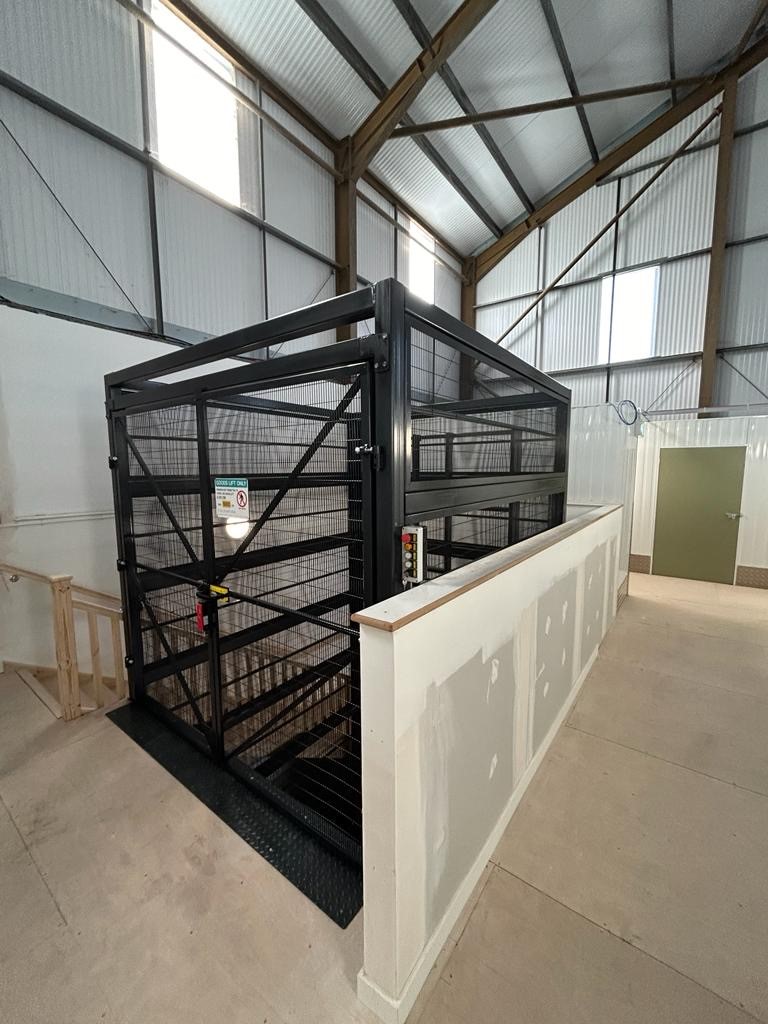
When planning vertical material handling in your facility, understanding the difference between a Goods Lift and a Goods Passenger Lift is essential. While they may look similar at a first glance, their purpose, permitted use and compliance requirements are significantly different, making correct specification critical from the outset.
-
What is a Goods Lift?
A Goods Lift is a platform lift designed solely to transport goods between floors, with no person permitted. These lifts are commonly used places such as warehouses, factories and distribution centers where goods need to be moved safely and efficiently on their own.
-
What is a Goods Passenger Lift?
A Goods Passenger Lift is primarily designed for moving goods but allows a trained and authorised operator to travel with the load when required. These lifts are not intended for general public use and are typically installed in industrial and commercial environments where supervision or careful handling of materials is necessary. Because the lift is designed to carry an operator, it incorporates additional safety measures, including internal controls for operator use, communication systems, and enhanced interlocks.
-
The Core Difference between a Goods Lift & Goods Passenger Lift
The fundamental difference between these two lift types is whether an authorised person is permitted to accompany the load during travel.
A Goods Lift is strictly for goods only, and is engineered purely for the material movement, allowing for simpler control arrangements and fewer operator protection features.
A Goods Passenger Lift is specifically designed to safely accommodate a trained and authorised operator alongside the goods, requiring additional safety measures including internal controls for operator use, communication systems and enhanced interlocks.
This difference has practical implications for both cost and specification. Goods Passenger Lifts are typically more complex to design and install due to enhanced safety and compliance requirements. Where goods simply need to be moved between levels without an operator with them, a Goods Lift is typically the most straight forward and economical solution. However, if the operation requires an operator to travel with the load for supervision, a Goods Passenger Lift becomes critical.
-
Regulations and Compliance
Ensuring your lift meets the correct regulations is critical for both safety and legal compliance.
Both lift types must carry either a UKCA mark or a CE mark to demonstrate conformity with essential health, safety, and environmental protection standards.
In addition, operators must consider LOLER and PUWER regulations.
LOLER – All lifting equipment needs to be thoroughly examined by a competent person at regular intervals (usually every 6 or 12 months).
PUWER – Places a duty on employers to ensure that all work equipment, including goods lifts are safe, maintained, and operated by trained staff.
-
When do you need a Goods Passenger Lift instead?
A Goods Passenger Lift is required where an operator must travel with the load, where fragile or high-value items need close supervision, or where multi-level operations demand controlled handling alongside the goods.
-
Conclusion
If you are assessing whether a goods lift or goods passenger lift is suitable for your application, our team can provide guidance based on your load requirements, space constraints and operational needs.
📞 Call us on 01778 345365 or email us sales@advancedhandling.co.uk
Explore some more related Blogs
News and case studies

How much does a Goods lift cost?
06 January 2025
What is a Mezzanine lift?
30 September 2024